
Sponsored · Global Innovation Spotlight
More Than Play
How an AI Companion Can Turn Screen Time Into Growth Time
Sponsored post. Published by arrangement with the organisation.
“Screen time.” Two simple words — and a thousand questions for parents.
Is my child spending too much time with a tablet? What are they watching? Is it just entertainment — or something more? And most of all: Is this helping them grow, or slowly replacing real connection?
It’s a real and valid concern. Research continues to show that mindless, unstructured screen use can negatively impact a child’s development — especially when it involves endless scrolling, hyperstimulating games, or content that overwhelms rather than nurtures.
But here’s a better question: What if the screen could become a tool for emotional growth? What if — instead of distraction — it offered empathy, insight, and support?
Not All Screen Time Is Created Equal
Today’s digital world is evolving — and with it, new tools are emerging. We’re seeing the rise of educational apps, therapeutic platforms, and AI-based tools designed to support—not hinder—healthy childhood development.
One area that needs special attention? Emotional intelligence.
Children are growing up in a complex world. They may know how to read, solve math problems, or even code. But many struggle to name their feelings , regulate their emotions, or ask for help. This emotional “gap” often shows up as tantrums, shutdowns, or silent confusion — leaving both children and parents feeling helpless.
Can Technology Really Help With That?
Yes — if it’s designed with intention. And that’s exactly where SODOG comes in.
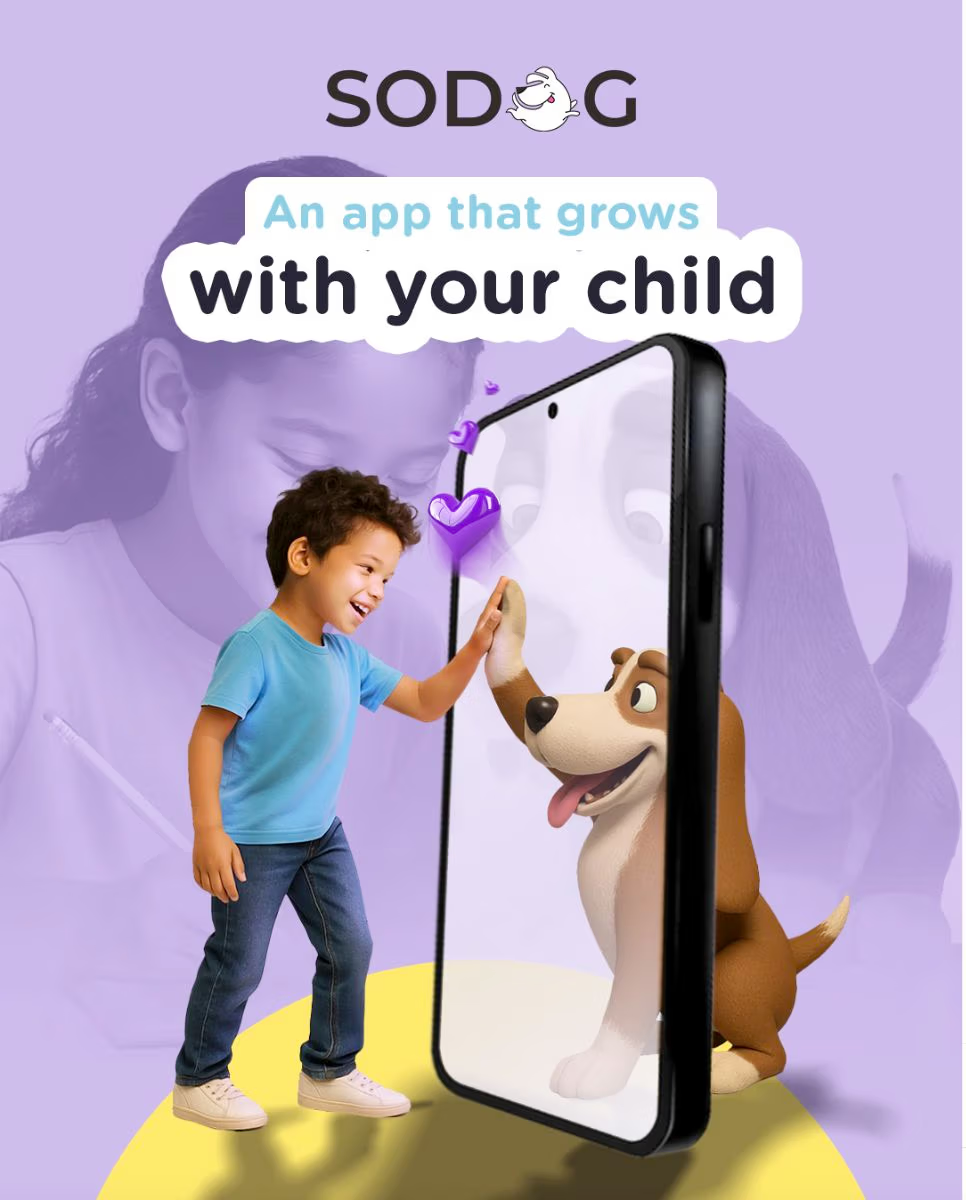
Meet SODOG: a screen-based emotional companion for kids ages 6 to 12. It’s not a game. It’s not therapy. It’s a warm, friendly AI-powered pup that gently helps children understand what they feel, and why.
How It Works
Short, 5–10 minute sessions where kids guide their virtual puppy through emotional “missions” — like feeling lonely, frustrated, or proud.
Stories that mirror real-life emotions , told through child-friendly metaphors and simple reflections.
Interactive guidance rooted in emotional development theory, encouraging kids to name, explore, and process feelings safely.
Tools for self-regulation , like calming breaths, emotional drawing, or “safe space” visualization.
Each session is short, calm, and focused. No hyperactive games. No loud noises. No manipulation. Just thoughtful, science-based design to help children build inner strength — one emotion at a time.
Why It Works
SODOG isn’t just cute. It’s backed by insights from top emotional development frameworks (CASEL, APA, Yale), and created by a team of educators, designers, and child psychologists. The structure respects attention spans and promotes meaningful, limited screen engagement that builds long-term skills.
And while it’s child-focused, it doesn’t leave parents out . A private, secure dashboard helps caregivers understand mood patterns and emotional engagement — without breaching privacy or asking intrusive questions.
What Makes SODOG Different?
✔️ No ads ✔️ No personal data collection ✔️ No third-party tracking ✔️ No open-ended AI chat
SODOG is built for safety from the ground up. We believe emotional development deserves a privacy-first approach — especially when it comes to kids.
A New Kind of Screen Time
We’re not here to fight screens. We’re here to reshape them into something better — a place where children are seen, supported, and taught how to understand themselves.
SODOG is more than an app. It’s a warm, curious, emotionally-aware companion that teaches your child something they’ll carry for life: 💛 how to feel, and be okay with it.
Discover SODOG and support our Indiegogo campaign today: 👉 indiegogo
Let’s turn screen time into growth time .
Have an innovation story of your own?
We welcome stories from founders, companies, researchers and organisations building something new, from any ecosystem.
Submit it for consideration