
Innovator · INNOVATION Manitoba
Scimar
The Missing Link
A MANITOBA BIOTECH SAYS MEDICINE HAS BEEN SEEING ONLY PART OF THE TYPE 2 DIABETES PICTURE, AND THAT THE MISSING PART COULD RESHAPE HOW THE WORLD PREVENTS, DETECTS, AND TREATS THIS GROWING DISEASE.
Dr. W. Wayne Lautt, Chief Scientific Officer & Co-Founder
In 2009, Dr. Lautt co-founded Scimar with his son, Chief Executive Officer Mick Lautt, to move that science from the laboratory to the world. The research foundation runs deep: decades of peer-reviewed publications, over $17 million in research grants, and patent protection in six jurisdictions.
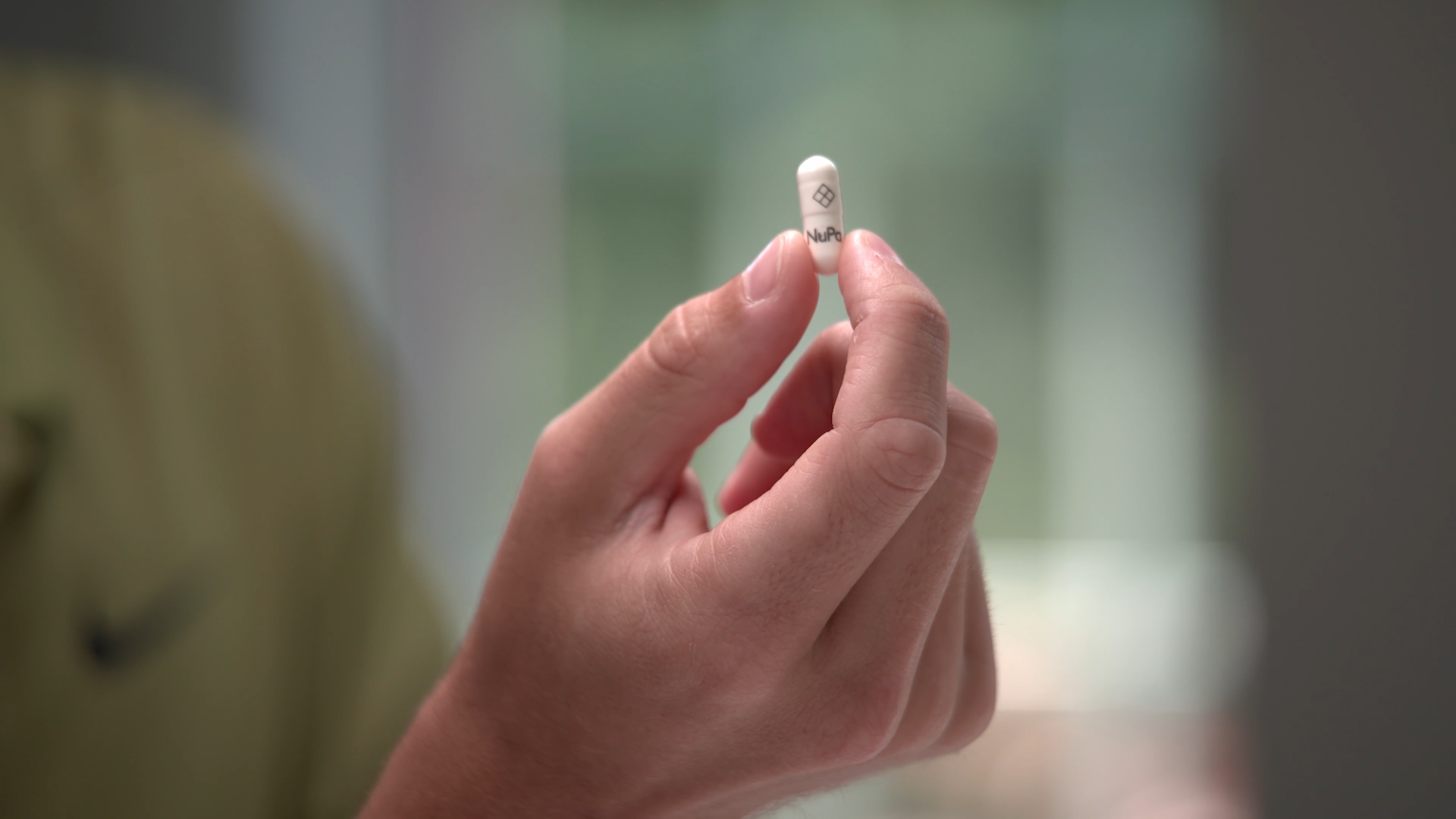
That mission to change how the world deals with type 2 diabetes has informed and inspired a suite of products spanning the full arc of the disease, from early diagnosis to prevention to treatment, all built on the same principle — healthy nutrient partitioning.
Our Breakthrough
We discovered a hormone and mechanism of action controlling the partitioning and storage of blood glucose into muscle.
When this mechanism is activated 2/3’s of blood sugar is stored in muscle, not fat.
Secretion of hepatalin declines with stress, lack of exercise, consumption of sugar, and aging.
The Longevity Problem
The healthspan-lifespan gap has widened to 9.6 years globally.
High-income countries see wider gaps (12.4 years in the U.S.).
Women face a larger gap than men (13.7 vs. 11.1 years in the U.S.).
Early onset age-related diseases diminish quality of life, increase human suffering and inflate healthcare cost.
Mick Lautt, Chief Executive Officer & Co-Founder
“Our intent is to change how the world deals with type 2 diabetes,” says Mick Lautt. “Our core science continues to drive our work and we are learning more as our work evolves. There are people who need help—including many in Manitoba—and we are confident we have the solution.”
Scimar has discovered that hepatalin is produced naturally by the body. Restoring it to normal levels helps return the body to its natural way of directing nutrients into muscle rather than storing them as fat. Scimar has shown that the absence of hepatalin action results in type 2 diabetes and obesity.
The contrast with the much-hyped GLP-1 drugs is sharp. These drugs work by slowing digestion and cutting the calories eaten among other effects, but in some published studies 40 to 60 percent of the weight lost was muscle, not fat. Scimar’s approach is to restore normal nutrient partitioning toward muscle and away from fat, without any negative side effects.
The Diabetes Problem
Nearly 800 million adults worldwide are estimated to be living with Type 2 diabetes. Source: World Health Organization (WHO), 2024–2025.
Millions more are prediabetic or undiagnosed.
Total diabetes-related health expenditures will reach one trillion USD by 2030.
Global Diabetes Prevalence – Source: International Diabetes Foundation
How Scimar carries out its mission is as distinctive as the science. Through its Wellness Transformation Network, the company partners with nonprofits and Indigenous communities across Canada, bringing wellness programming and clinical research directly to the people who carry the heaviest burden of the disease. The rationale is simple: the communities most affected by type 2 diabetes should help shape the science meant to end it.
“Scimar’s discoveries have also led to a broader understanding of the interaction between the body and lifestyle choices. Individuals do have the ability, on their own, to change their lifestyle, and our Wellness Transformation Network promotes that,” says Dr. Lautt, Scimar’s Chief Scientific Officer. “Our preventative and therapeutic products are important supports in the battle against obesity and type 2 diabetes, but lifestyle choices are key.”
Scimar’s goal extends beyond diabetes itself. As people live longer, too many of those added years are spent in declining health. Scimar believes its products can help change that trajectory, extending not just how long people live, but how long they live in good health.
As Scimar moves its science forward and commercializes its product line, the next chapter in the world’s understanding of type 2 diabetes will carry a Manitoba byline.
Have an innovation story of your own?
We welcome stories from founders, companies, researchers and organisations building something new, from any ecosystem.
Submit it for consideration