
On these pages
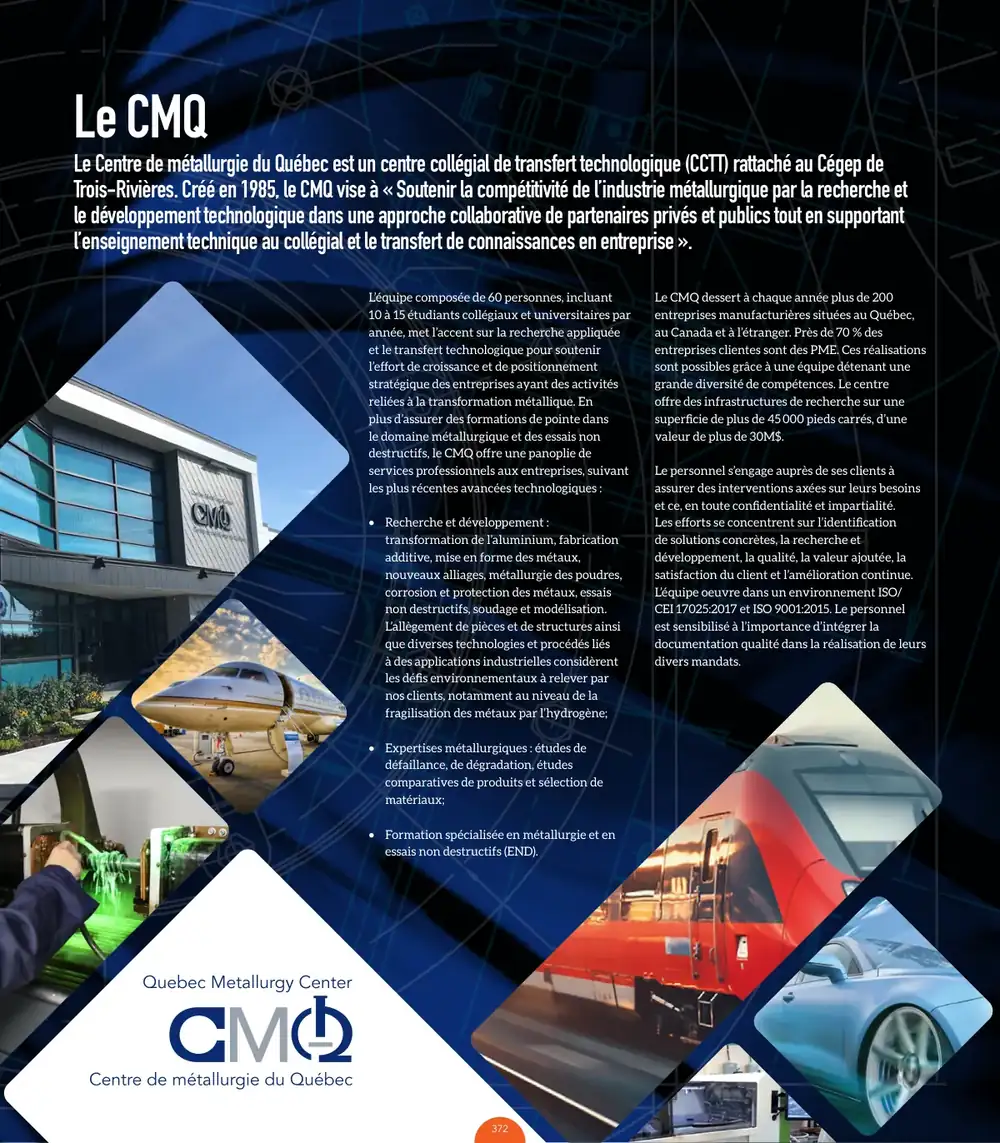
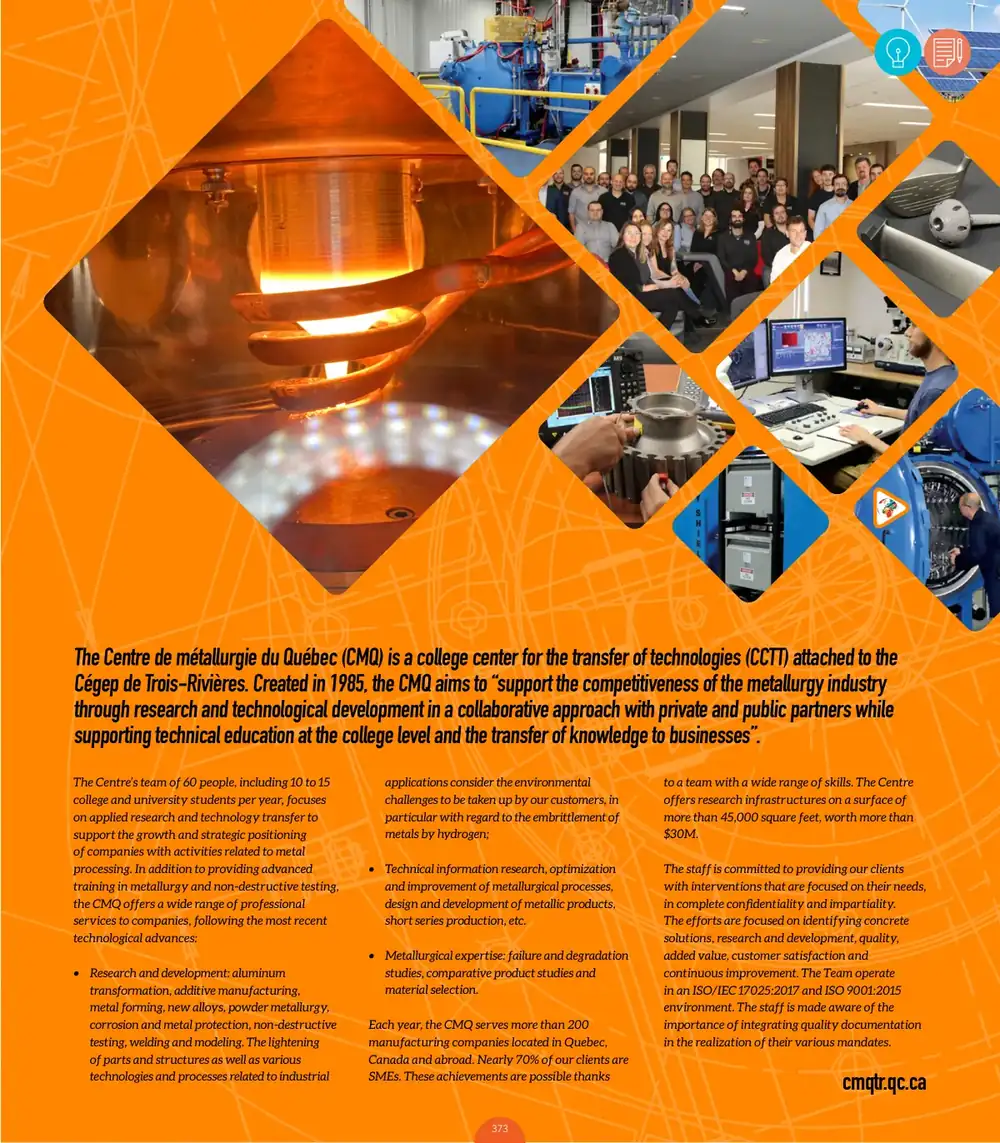
LE CMQLe CMQ, the Centre de métallurgie du Québec, is a technology transfer centre attached to Cégep de Trois-Rivières in Canada. Founded in 1985, it supports over 200 manufacturers, mostly small firms, through applied research and training.
Read the story →Stories that connect
- CDCQ, Centre de développement des composites du Québec (CDCQ)Québec · INNOVATE Québec, 2024CDCQ, founded in 1989 and running ISO 17025 accredited lab testing, could complement Le CMQ's metallurgy and non-destructive testing training with composite materials expertise and testing services.
- Kristoffer Jones, Naval Welding InstitutePhiladelphia · INNOVATE Philadelphia, 2026Naval Welding Institute works on welding, metallurgy and non-destructive testing education, which could pair with Le CMQ's metallurgy and NDT training as a research and training partner.
- ITMI, Institut technologique de maintenance industrielle (ITMI)Québec · INNOVATE Québec, 2024ITMI's CCTT mandate since 2011 serves the metallurgy sector and delivers predictive maintenance, which could help Le CMQ's failure and degradation studies reach industrial clients.
On these pages
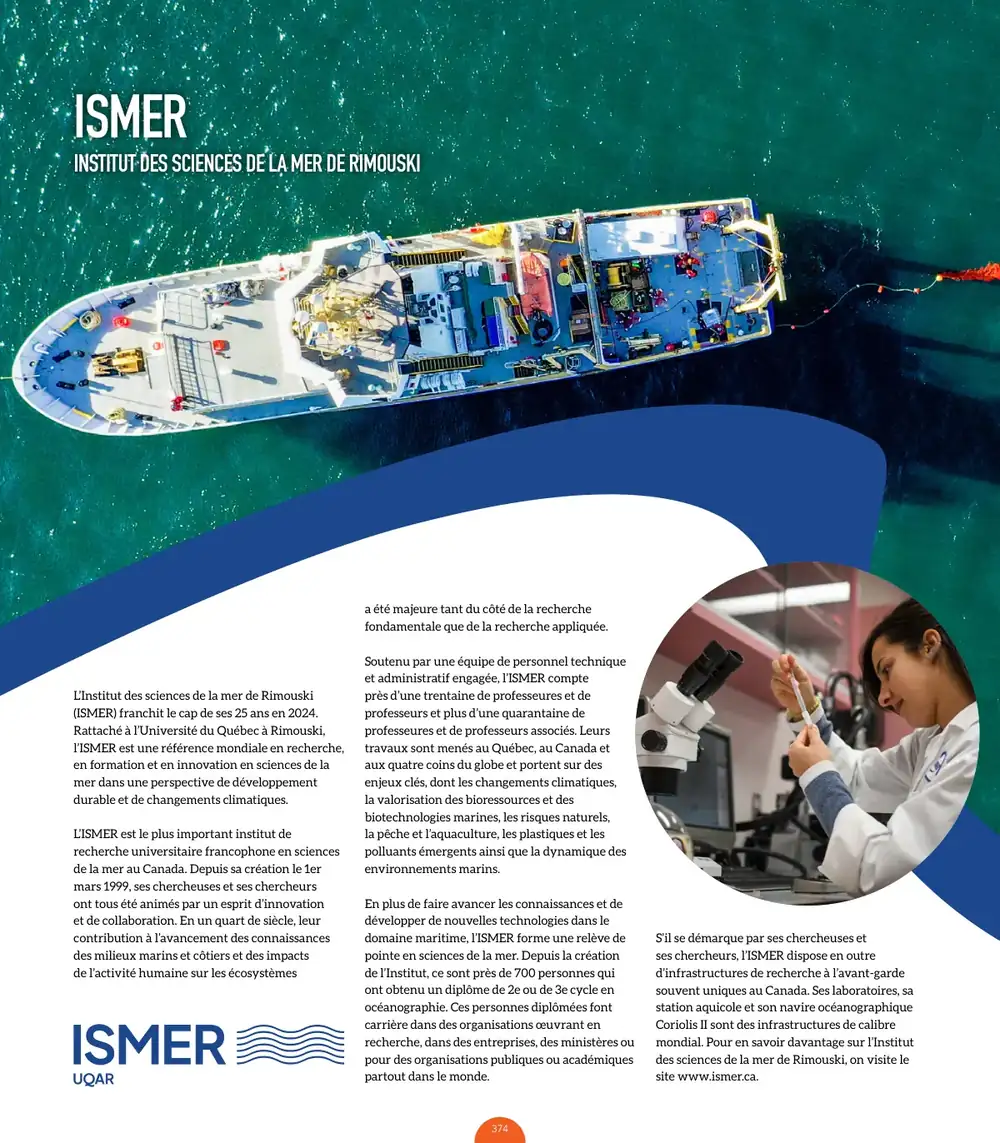
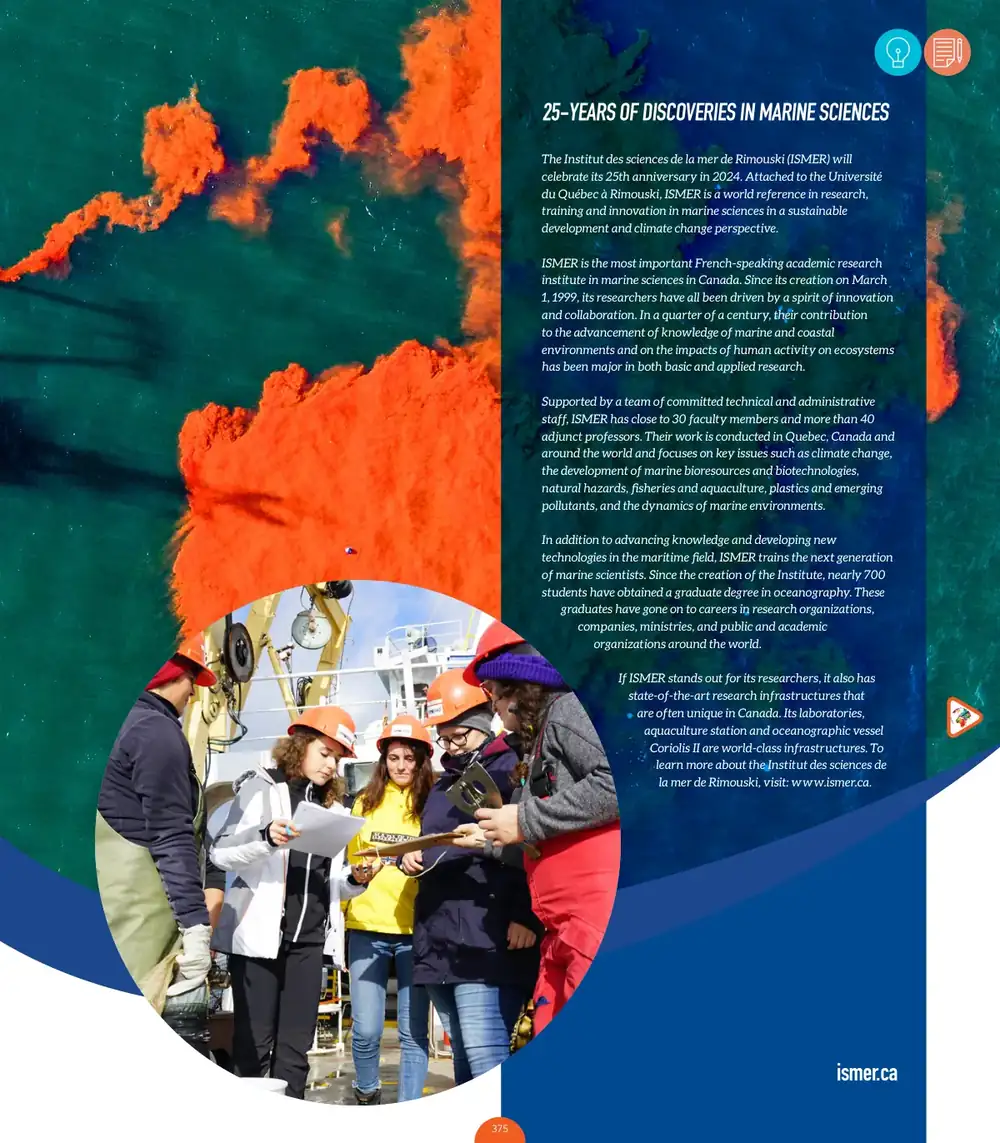
IsmerISMER, the marine sciences institute of Université du Québec à Rimouski, studies oceans, climate change and aquaculture in Rimouski. It is Canada's largest French-speaking marine sciences research institute, and it has awarded nearly 700 graduate oceanography degrees.
Read the story →Stories that connect
- CRBMQuébec · INNOVATE Québec, 2024CRBM runs marine biotechnology pilot bioprocesses and has carried out innovation projects for more than 300 companies, which could complement ISMER's marine bioresources and biotechnology research in Canada.
- MerinovQuébec · INNOVATE Québec, 2024Merinov's over 70 corporate clients and applied research in aquaculture and fisheries could help ISMER move its aquaculture and marine bioresource research toward industry use in Canada.
- Miguel Miranda, IPMA (Instituto Português do Mar e da Atmosfera, I.P.)Oeiras · INNOVATE Oeiras, 2021IPMA's monitoring of pelagic fish stocks and marine and climate research in Portugal could be compared with ISMER's marine sciences and climate change work, and the two institutes could share research partnerships.