
On these pages
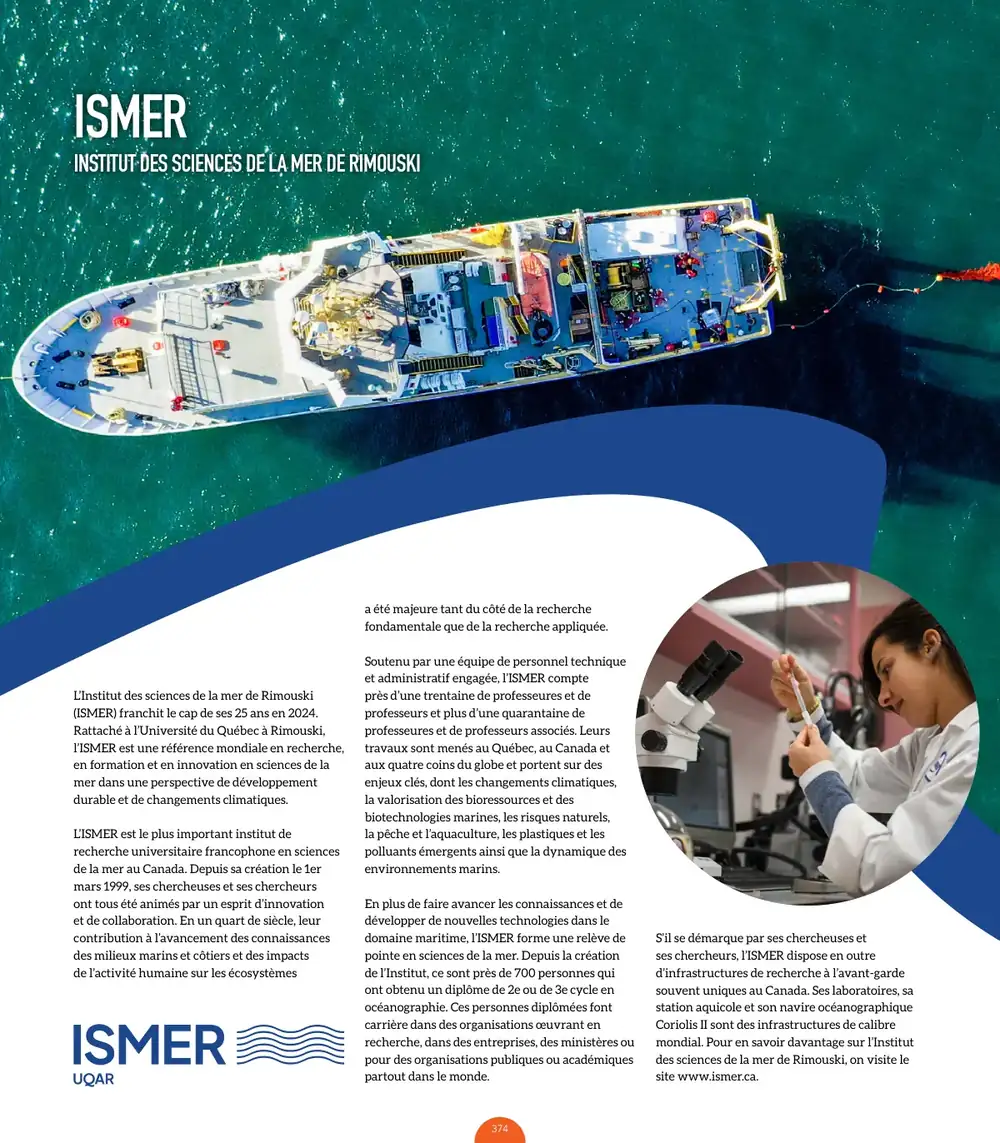
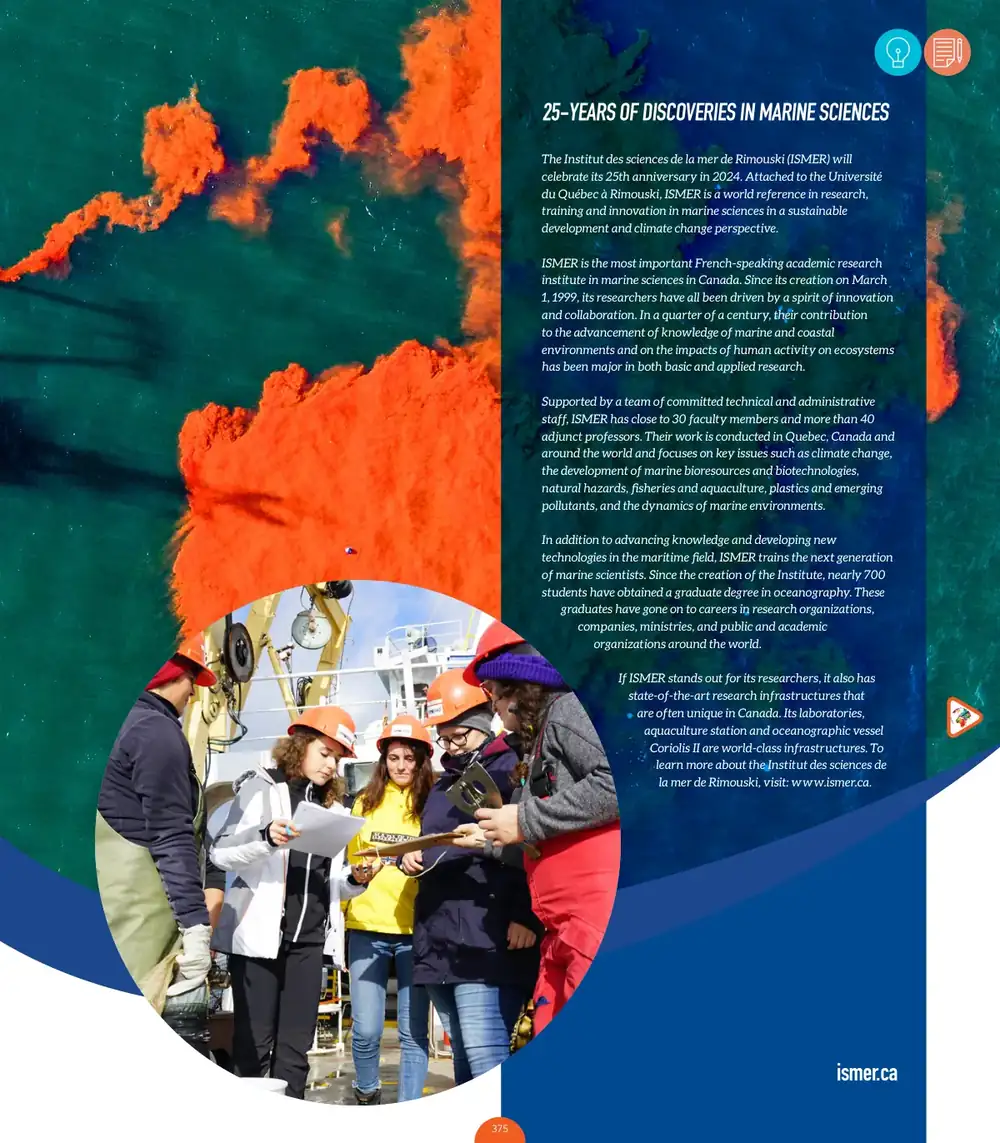
IsmerISMER, the marine sciences institute of Université du Québec à Rimouski, studies oceans, climate change and aquaculture in Rimouski. It is Canada's largest French-speaking marine sciences research institute, and it has awarded nearly 700 graduate oceanography degrees.
Read the story →Stories that connect
- CRBMQuébec · INNOVATE Québec, 2024CRBM runs marine biotechnology pilot bioprocesses and has carried out innovation projects for more than 300 companies, which could complement ISMER's marine bioresources and biotechnology research in Canada.
- MerinovQuébec · INNOVATE Québec, 2024Merinov's over 70 corporate clients and applied research in aquaculture and fisheries could help ISMER move its aquaculture and marine bioresource research toward industry use in Canada.
- Miguel Miranda, IPMA (Instituto Português do Mar e da Atmosfera, I.P.)Oeiras · INNOVATE Oeiras, 2021IPMA's monitoring of pelagic fish stocks and marine and climate research in Portugal could be compared with ISMER's marine sciences and climate change work, and the two institutes could share research partnerships.
On these pages
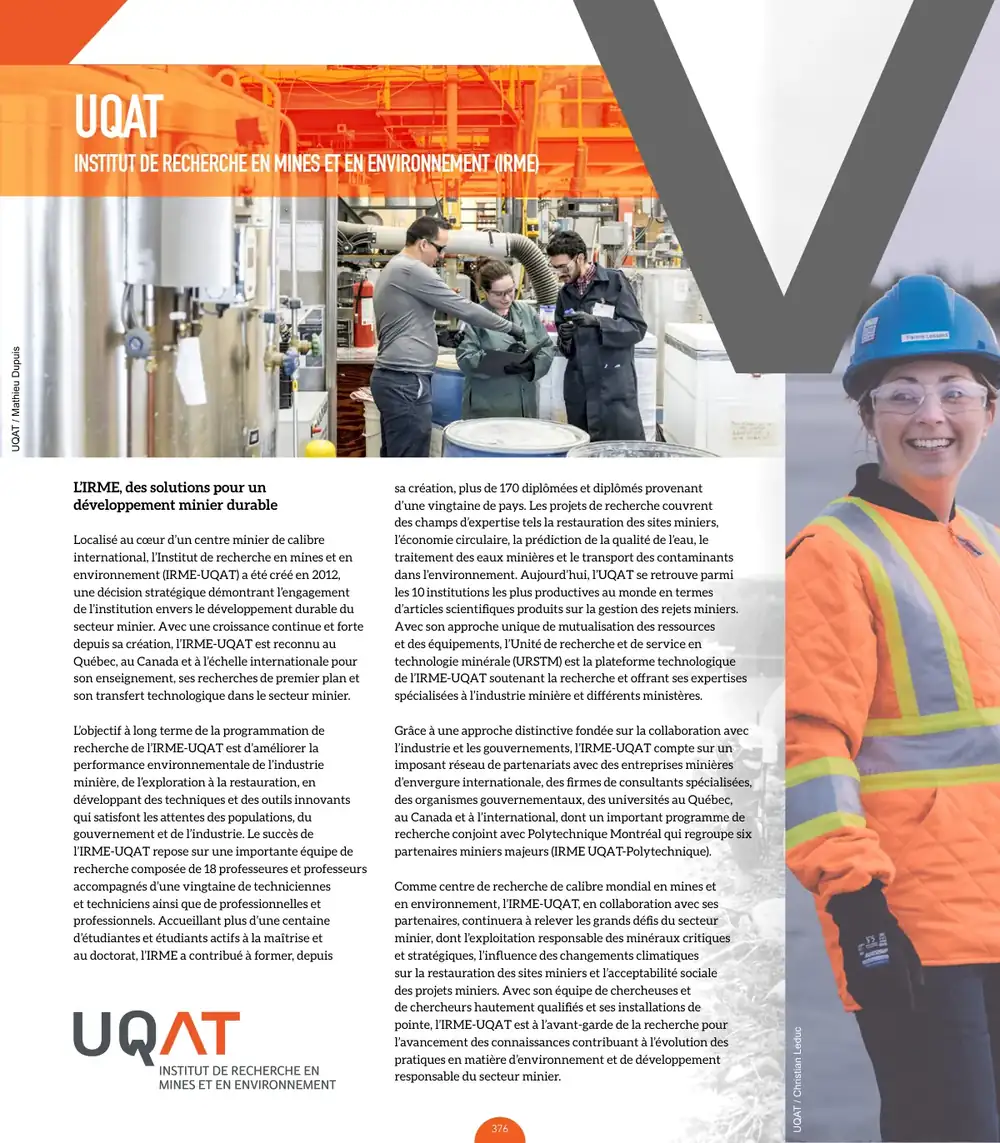
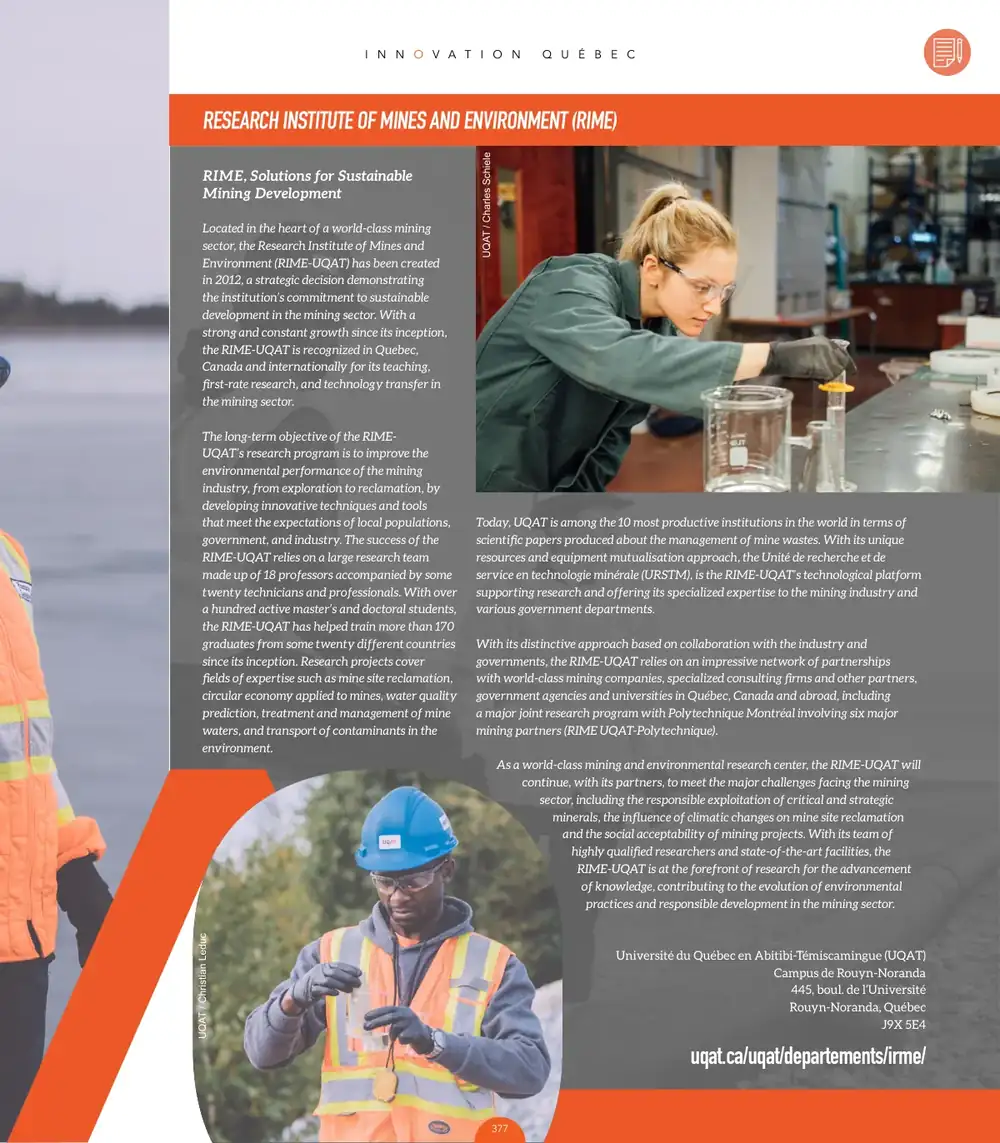
UQATUQAT's Institut de recherche en mines et en environnement in Rouyn-Noranda, Canada, researches mine site reclamation, mine water treatment and water quality prediction. It ranks among the ten most productive institutions worldwide on mine waste management.
Read the story →Stories that connect
- Cteau (Centre des technologies de l'eau)Québec · INNOVATE Québec, 2024Cteau, a Montréal water technology transfer centre running about eighty projects a year, could partner with IRME-UQAT on pilot tests of mine water treatment and reuse, both working in Canada on water quality.
- Carmine Ciccocioppo, OsmofloAdelaide · INNOVATE Adelaide, 2023Osmoflo's non-thermal brine concentration and water treatment expertise, with close to 100 plants monitored around the clock, could complement IRME-UQAT's work on treating mine waters.
- Khaled Al Huraimel, BEEAH GroupGlobal · Voices of the Future, 2024BEEAH Group's integrated waste management, recycling and resource recovery work, achieving a 90% waste diversion rate, could complement IRME-UQAT's circular economy research on mine site reclamation.